
It was late summer, nearing sundown. My grandson Charlie and I were in the front yard. Two hundred miles to the west, wildfires were raging in Arizona. The haze from the smoke was always on the horizon these days, and it turned the sun into a bright red ball. It had been like this for many days.
In my head I heard Tanya Tucker singing That Georgia sun was blood-red and goin’ down. No doubt the atmosphere in Georgia is thicker and heavier than ours. We never have blood-red suns in New Mexico. But now, suddenly, we do.
Grandma, is the sun going to blow up?
Charlie was seven years old. I knew exactly how he felt, terrified and terrified to show it. My own child-self: Are the Russians going to drop an atom bomb on us? And Why don’t we have a fallout shelter? Questions I never spoke aloud.
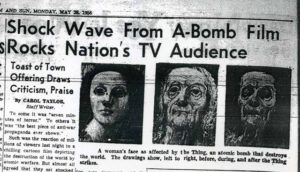
When my sister and I were children, The Ed Sullivan Show showed an animated film that gave narrative and pictures to our terror. The film, “A Short Vision,” haunted us. Years later I wondered, Could it have been as bad as I remember? Not until the internet could I find out that indeed it could, indeed it had been. And six minutes long!
Watch it here: http://conelrad.blogspot.com/2011/06/short-vision-ed-sullivans-atomic-show.html
Charlie is in high school now. A typical teenager, he no longer voices his fears to his grandma. What haunts him now, I wonder–school shooters, the uncertainty of our planet, terrorism of every stripe?
I do believe ’twas ever thus. Every generation has its horrors and nightmares, I know. But it seems, whether true or not, that our existential dread is exaggerated these days. Everyone seems to be frightened. To be dreading something that is about to happen.
And now we all are hypervigilant. Loud noises, smoke on the mountain, people who look strange or different. The news, always the news.


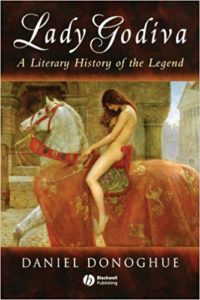 Yes, she was a person. Before she was a legend and long before she was an image on a box of chocolates, she was a woman. She lived in Coventry, England, in the Eleventh Century. Her name was Godgifu (gift from God). She married Leofric, Earl of Mercia. Widowed in 1057, she died in 1067. (Source: Lady Godiva: A Literary History by Daniel Donoghue)
 And, yes, she was happy. She was so happy that she continued to ride her horse her whole life long, and when the weather was good, she rode naked. (Source: a little bird told me.)
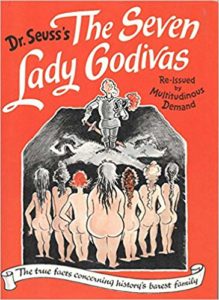 Lady Godiva is the subject of novels, poems, paintings, and sculpture. She even captured the imagination of Dr. Seuss, who took part of her legend and made a book called The Seven Lady Godivas.